
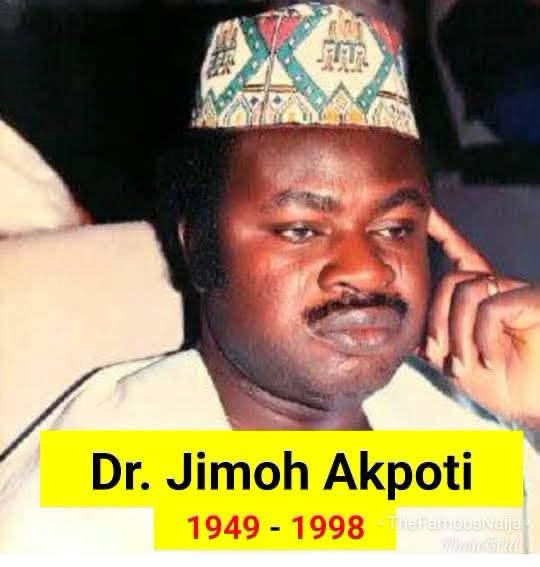
Dr. Jimoh Abdul Akpoti was born around 1949 in Obeiba-Ihima, in present-day Okehi Local Government Area of Kogi State (then part of Kwara State and the old Northern Region). Raised in Ebiraland with a strong dedication to academics and community advancement, his intellectual promise earned him an international scholarship to study medicine in the former Soviet Union. He enrolled at the prestigious Bogomolets National Medical University in Kyiv (modern-day Ukraine), where he trained and qualified as a medical doctor.
During his years as a foreign medical student in the Soviet Union, he met Ludmila Kravchenko, a native of Rakitna in the Chernivtsi region of Ukraine. The couple married and later relocated to Nigeria in the late 1970s, settling initially in Ilorin, Kwara State, before establishing permanent roots in his hometown of Obeiba-Ihima in Ebiraland. Together, they raised four children, including their only daughter, Senator Natasha Hadiza Akpoti-Uduaghan.
Driven by a desire to bridge the healthcare deficit in rural Ebiraland, Dr. Akpoti established a private hospital in Ihima. Rather than operating his medical practice strictly as a commercial venture, he ran the facility as a humanitarian lifeline for the indigent. He became famous across Okehi, Adavi, and Okene for treating impoverished patients free of charge, waiving surgical and maternity fees for struggling families, and personally donating his own blood to save critically ill patients when blood banks were depleted or families could not afford transfusions. Beyond medicine, he funded educational scholarships for indigent students across the district and provided financial grants and inputs to local farmers.
His grassroots popularity naturally propelled him into public service during Nigeria's Third Republic. Running on the platform of the Social Democratic Party (SDP), Dr. Akpoti was elected as the pioneer Member of the Federal House of Representatives representing the Okehi/Adavi Federal Constituency in 1992. In the National Assembly, he advocated for rural infrastructure, primary healthcare expansion, and educational funding until the military intervention of November 1993 truncated the Third Republic. Following the dissolution of parliament, he returned to his medical practice and community development work in Ihima. Dr. Jimoh Abdul Akpoti passed away prematurely on November 3, 1998, at the age of 49.
💬 Community Discussion 0
Representing Ebira voices across all LGAs & the DiasporaSign in with your Email or Phone Number — or create your cultural profile with your Ebira Name, LGA, and Hometown — to comment and react.
No comments yet. Be the first voice from the community to share your thoughts!