
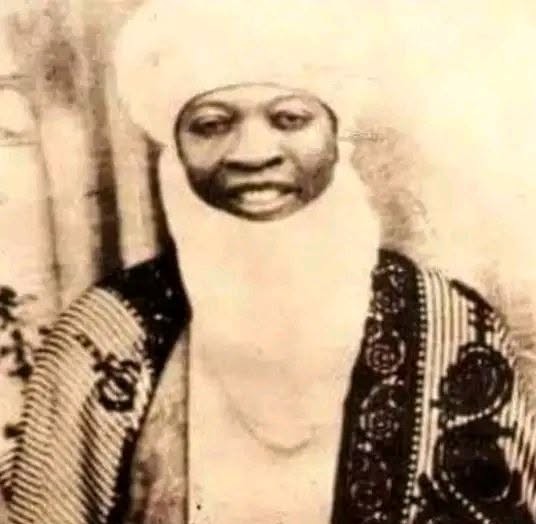
Attah Omadivi Abonika was an influential traditional leader in the history of Ebiraland and one of the earliest individuals recognised by the British colonial administration as Attah of the Ebira people. His leadership, which began around 1904 and ended with his death in January 1917, coincided with a significant period of political transformation in Ebira society.
Before the establishment of colonial administration, Ebiraland operated a largely decentralised traditional political system. The major traditional districts, including Okengwe, Adavi, Eika, Eganyi and Ihima, maintained independent leadership structures under their respective clan heads and traditional authorities.
The arrival of the British colonial administration introduced a new political arrangement aimed at establishing centralised authority through the indirect rule system.
During the British military expedition into Ebiraland in 1903, Omadivi became associated with the colonial authorities. His cooperation with the British eventually contributed to his recognition as District Head of Okene in 1904.
His emergence was, however, not universally accepted by other traditional leaders across Ebiraland. Historical accounts indicate that his authority was largely restricted to Okene, as leaders in other traditional districts continued to exercise independent influence and resisted the idea of submitting to a central authority.
Despite these limitations, Omadivi became an important intermediary between the British administration and the people of Okene during the early colonial period.
His relationship with the colonial government remains one of the debated aspects of his historical legacy. While British officials reportedly considered him a loyal ally, sections of Ebira historical memory associate him with the introduction of British colonial control into Ebiraland.
Omadivi was also the maternal grandfather of Attah Ibrahim Chogudo Onoruoiza, who succeeded him in 1917 and later became the first widely recognised paramount ruler of Ebiraland under the centralised Native Authority administration.
Omadivi died in January 1917 after approximately thirteen years as District Head. His death created an opportunity for the colonial administration to reorganise traditional governance in Ebiraland.
Although his authority did not extend across all Ebira districts, his period of leadership remains an important chapter in understanding the origins and evolution of the modern traditional institution of Ebiraland.
💬 Community Discussion 0
Representing Ebira voices across all LGAs & the DiasporaSign in with your Email or Phone Number — or create your cultural profile with your Ebira Name, LGA, and Hometown — to comment and react.
No comments yet. Be the first voice from the community to share your thoughts!